Contents
What Joakim Möller Taught Me About Photography
Introduction
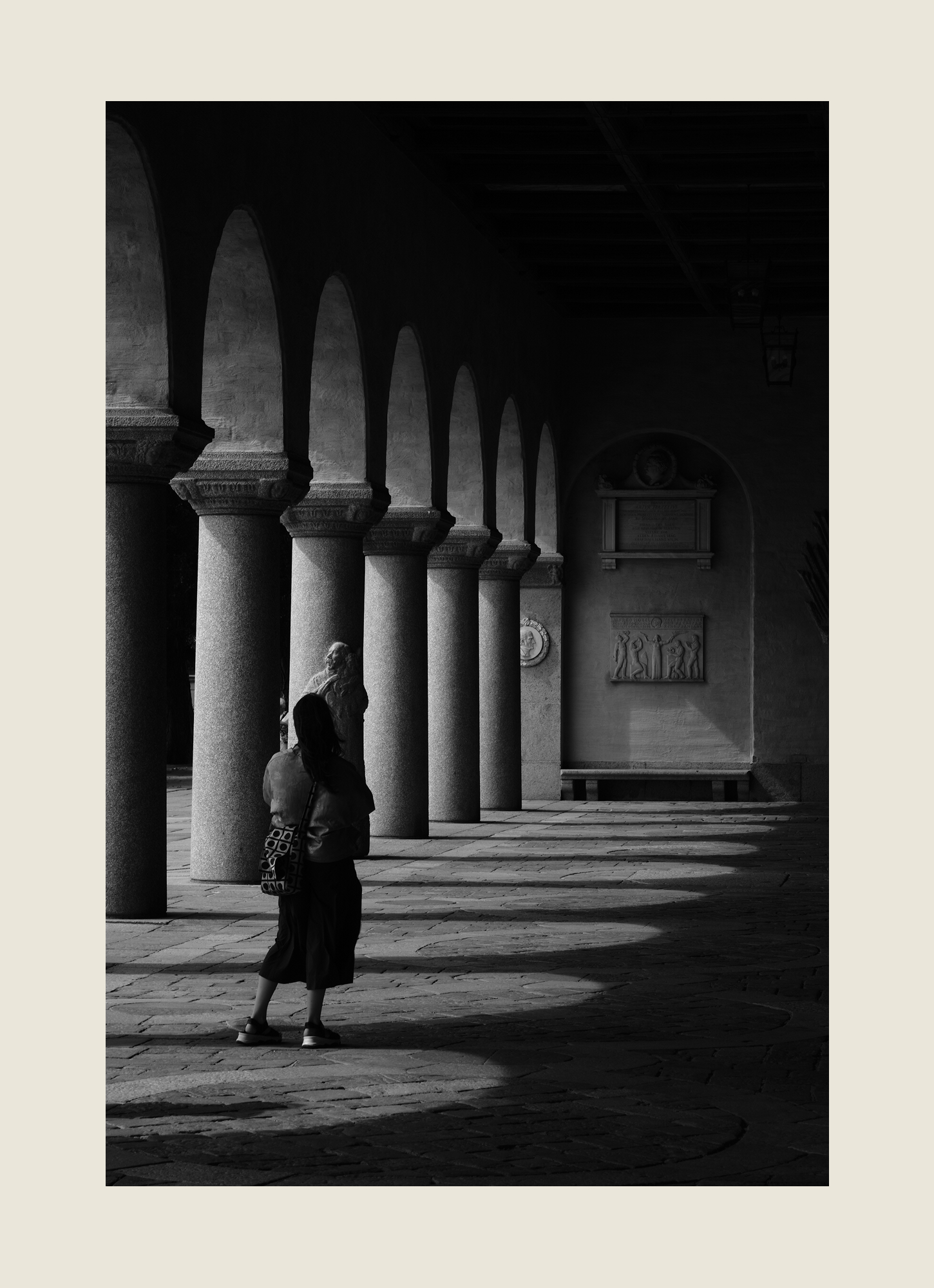
Joakim Möller is, without a doubt, one of my all time favorite photographers. His work has resonated deeply with me over the past few years. He creates remarkably minimal compositions that carry an extraordinary emotional weight. His use of diptychs, in particular, has a way of striking a quiet chord with the viewer and inviting them to pause, interpret, and wonder. I have heard several photographers describe his work as poetry, and I understand exactly why.
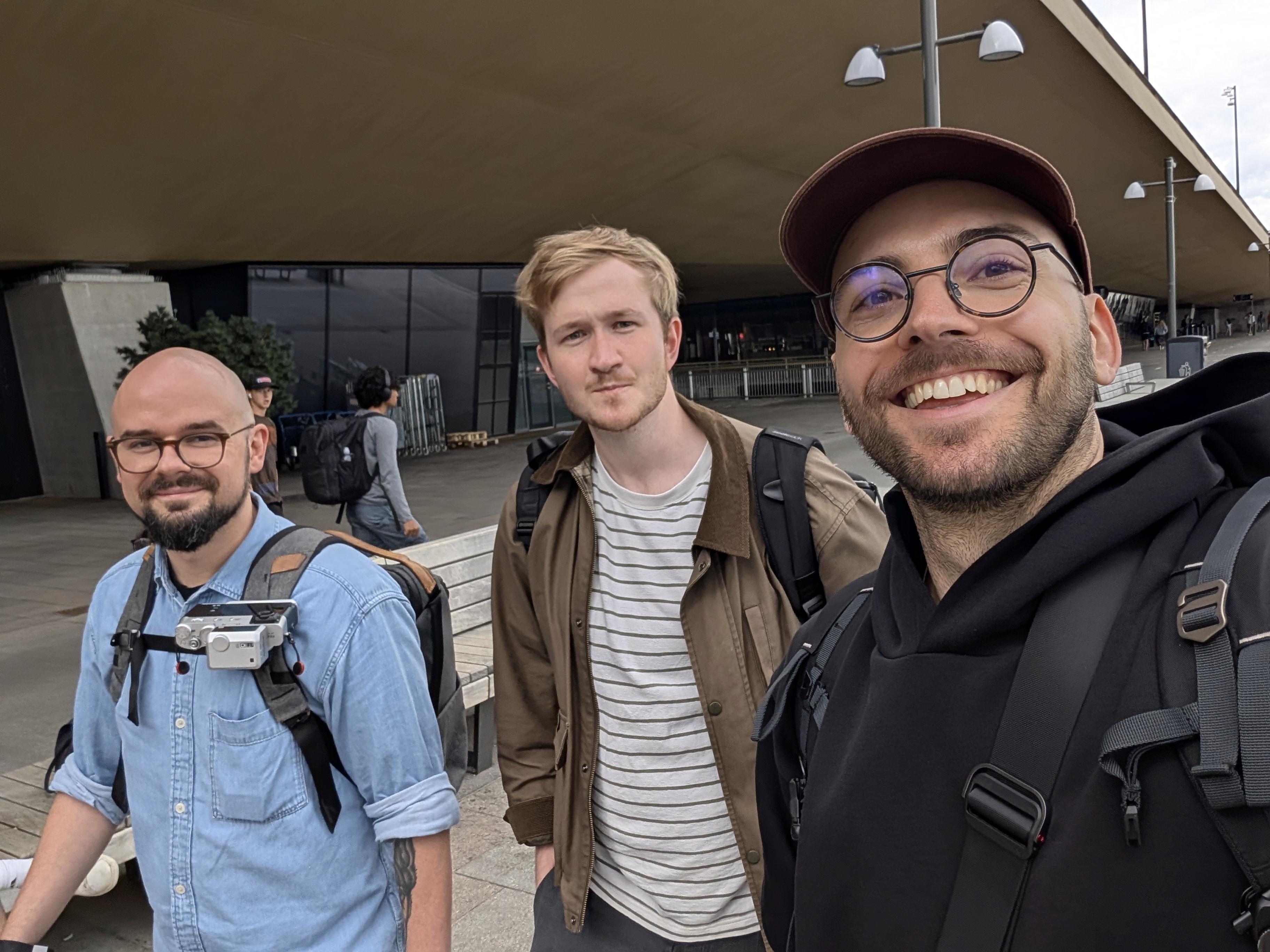
Joakim has had a significant influence on the way I perceive photography as an art form. In many ways, his work has become a compass for me when it comes to composition, aesthetics, and emotional charge. That is why I was genuinely excited when I found out he was organizing a photography workshop in Stockholm. I immediately reached out to a friend, and we organized a trip around it.
If I'm being honest, I arrived at the workshop carrying a lot of expectations. I had constructed an idea of who Joakim was, how he would talk about photography, what his technical abilities would be like, and what kind of person he would be. It is funny how easily we turn someone's art into a reflection of the person behind it. We create an image of the artist based on their work, and then expect the human being to fit inside that image.
Joakim completely defied mine.
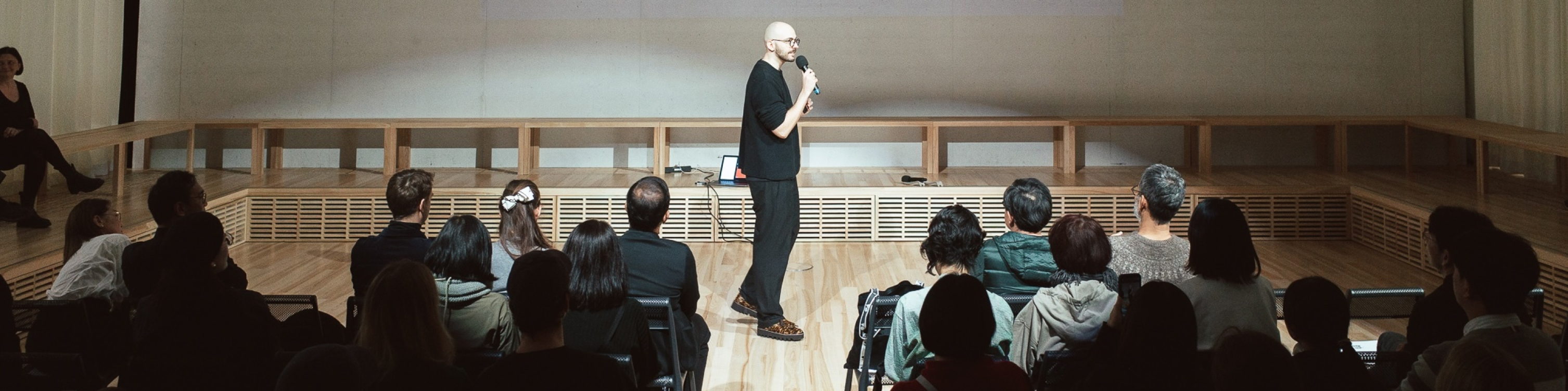
He turned out to be an incredibly kind, down-to-earth, and humble person who approaches photography with something I would describe as childlike curiosity. At the very beginning of the workshop, he asked us what we expected to learn, why we had come to Stockholm, and what we hoped to get out of the two days.
The answers from our small group were remarkably similar. Most of us wanted to understand how he approached editing, composition, and photography so that we could somehow get closer to the level of work he produces.
Joakim graciously accepted the compliments, but quickly made it clear that he did not see himself in quite the same way we did. He spoke honestly about his relationship with photography and how he approaches the craft, while also cautioning us against idealizing him. The reality, he explained, might be quite different from what we imagined.
One of the things that genuinely shocked me was learning that, despite his success and extraordinary visual taste, he never really learned how to operate a camera in the technical sense.
As someone who is deeply interested in tools and technology, this completely challenged my assumptions. I have always believed that understanding your equipment and its technical limitations gives you greater freedom to express yourself intentionally. In my mind, mastery of the tool creates possibilities.
Joakim showed me that perhaps the relationship can work in the opposite direction.
That was only the beginning of two days in which my assumptions about photography were repeatedly challenged by his talent, taste, honesty, and humility.
Walking the Streets
Before we went outside, Joakim explained how the workshop would work.
The first day would be spent walking through the streets of Stockholm, practicing street photography through a series of carefully designed assignments based on his approach to the craft.
The second day would focus on editing, where we would take what we had learned and bring it together.
Then he gave us our first assignment, and it immediately changed the way I thought about photography. He showed us a photograph he had taken and gave us ten minutes to crop as many individual images from it as we could. We were not shown his final crop. We had to find our own. For ten minutes, everyone interpreted the same photograph differently. Interestingly, many of our choices were quite similar, yet nobody arrived at the exact crop Joakim had chosen. When the exercise was over, he showed us his interpretation and explained the intention behind it.
That was my first major lesson of the workshop: intention and vision matter more than technique.
It is a lesson that immediately resonated with the way I think about product development as well. A tool can help you execute an idea, but it cannot give you the idea in the first place. Before you decide how to make something, you need to understand what you are trying to say.
After that, we went into the streets.
Each assignment reflected a different part of Joakim's thought process. Out of respect for his work and the workshop itself, I will not go into the specifics of the exercises. What I can say is that each one pushed my understanding of street photography further than I had expected. All of his workshops have a similar structure, so if you wish to find out what the other assignments were, I highly encourage you to sign up for one of his workshops.
They forced me to become more attentive to my surroundings, to work with chaos rather than against it, and to make intentional decisions within an environment I could not control.
More than anything, I was learning to "notice".
Editing
After the first day, I realized how much I still had to learn. There is a strange gap between feeling like you understand something and actually understanding it. The more I learned, the more I realized that almost everything I thought I knew about photography could be interpreted, approached, and understood in completely different ways. I was especially excited for the editing portion of the workshop. Naturally, I had already built an expectation of what that would look like.
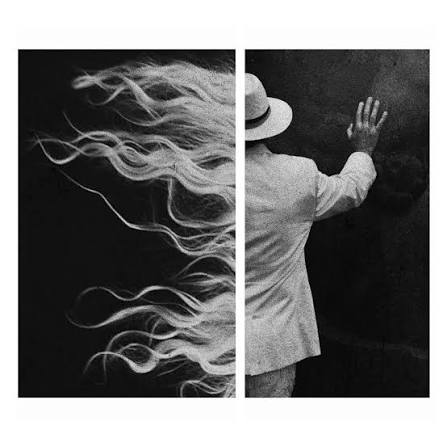
Once again, Joakim completely surprised me.
I was genuinely shocked to discover that he does all of his editing on an iPhone. I had expected Photoshop, Lightroom, Capture One, complex masking, precise adjustments, and all the other tools we tend to associate with professional photography. Instead, Joakim opened Snapseed and began editing. And somehow, that was way more then enough.
He showed us how much could be extracted from an image using incredibly simple tools. There was no obsession with technical precision. There was simply an understanding of what the image needed. He seemed to possess an almost uncanny ability to find something extraordinary inside photographs that I would have easily overlooked. He selected images that I might have considered boring, ordinary, or simply not worth keeping. Then, as he began editing them, something slowly emerged. His character started to reveal itself through the choices he made. The photographs he paired together were rarely obvious. Yet they felt harmonious. There was a sense of mystery to them, something slightly unresolved that made you want to invent your own explanation.
Joakim was very intentional about this. He explained that he often looks for mysticism in his photography because mystery gives the viewer room to imagine. When everything is explained, there is little left for the audience to contribute. But when something remains ambiguous, the viewer can create their own story and attach their own meaning to the image.
That idea stayed with me.
Before the workshop, I would never have imagined that such a high level of photographic quality could be achieved through such simple tools. It made me realize that the sophistication of the tool has surprisingly little to do with the sophistication of the result. In the right hands, simplicity can be incredibly powerful.
Final Thoughts
I was so moved by the workshop that I still find myself returning to it mentally almost every day. Even a month later, I continue to discover things I did not fully absorb during those two days. There was simply too much information, too many new perspectives, and too many assumptions being challenged at once.
But there are a few lessons that I hope stay with me for the rest of my life.
Photography is supposed to be fun.
Photography is not fundamentally about taking good pictures. It is about enjoying the process of looking, experimenting, and being curious. You do not need to put pressure on yourself to produce something great every time you pick up a camera. Go out and have fun. Look for interesting shapes, frames, light, and moments. If you get one genuinely good photograph in a month, that can be enough.
Photograph the places you know.
Some of the best photographs can come from the places you see every day. When you live somewhere long enough, you develop a relationship with it. You understand its rhythms, its light, its people, and its peculiarities. You begin to see things that an outsider might never notice.
Familiarity can become a creative advantage.
Remove distractions.
The fewer unnecessary elements there are in an image, the stronger the image can become. Minimalism is not about having less for the sake of having less. It is about understanding what deserves to remain.
Play with perspective.
Photography should involve play. Change your perspective. Get closer. Move further away. Look up. Look down. Experiment. The goal is not always to produce something immediately useful. Sometimes the act of looking differently is valuable in itself.
Step outside what you already know.
Most photographers naturally gravitate toward photographs they already know how to take. There is comfort in repeating something that has worked before. But growth comes from deliberately putting yourself in situations where you do not know what you are doing. Photograph unfamiliar places. Try unfamiliar compositions. Give yourself permission to fail.
Make picture progressions. Put yourself into environments that are outside your normal routine and document what you see. The point is not necessarily to produce a masterpiece. The point is to expand your visual vocabulary.
Gear is not the photographer.
Gear can certainly help a great photographer.
But it does not make one.
I came into the workshop believing that understanding your equipment was essential to becoming a better photographer. I still believe technical knowledge has value, but I no longer see it as a prerequisite for meaningful artistic expression. A camera is a tool. A phone is a tool. Photoshop is a tool. Snapseed is a tool. Every tool has limitations and advantages. A mirrorless camera might give you greater control, but a phone is incredibly portable. A professional camera might produce enormous RAW files, but a phone allows you to take a photograph, edit it, and experiment with it while sitting in the back of a taxi.
The tool matters far less than what you do with it.
There is probably more in the photograph than you think.
One of the most valuable things I learned was to stop dismissing ordinary photographs too quickly. The photograph you consider boring might contain a shape, a shadow, a relationship, or a fragment that becomes interesting when isolated or combined with another image. Sometimes the photograph itself is not the final product. It is simply the raw material.
Give yourself time.
Photography requires patience. You need time to experiment, to fail, to become uncomfortable, to notice things, and to develop your own way of seeing. Look for interesting objects, shapes, perspectives, and frames. But above all, have a reason for why you are looking at them. Intention does not mean every photograph needs to have a grand conceptual meaning. Sometimes the intention is simply curiosity.
You do not need to be a technician to be an artist.
Perhaps this was the most important lesson for me.
You do not need to be a highly skilled craftsman to create meaningful art. Tools are just tools. They have limitations, advantages, and characteristics that can either constrain you or become part of your creative language. I came to Stockholm thinking that mastery of the equipment was an important part of mastering photography. I left understanding that mastery of the equipment and mastery of the art are two very different things. Joakim Möller reminded me that the most important instrument in photography is not the camera.