Savanna One

Introduction
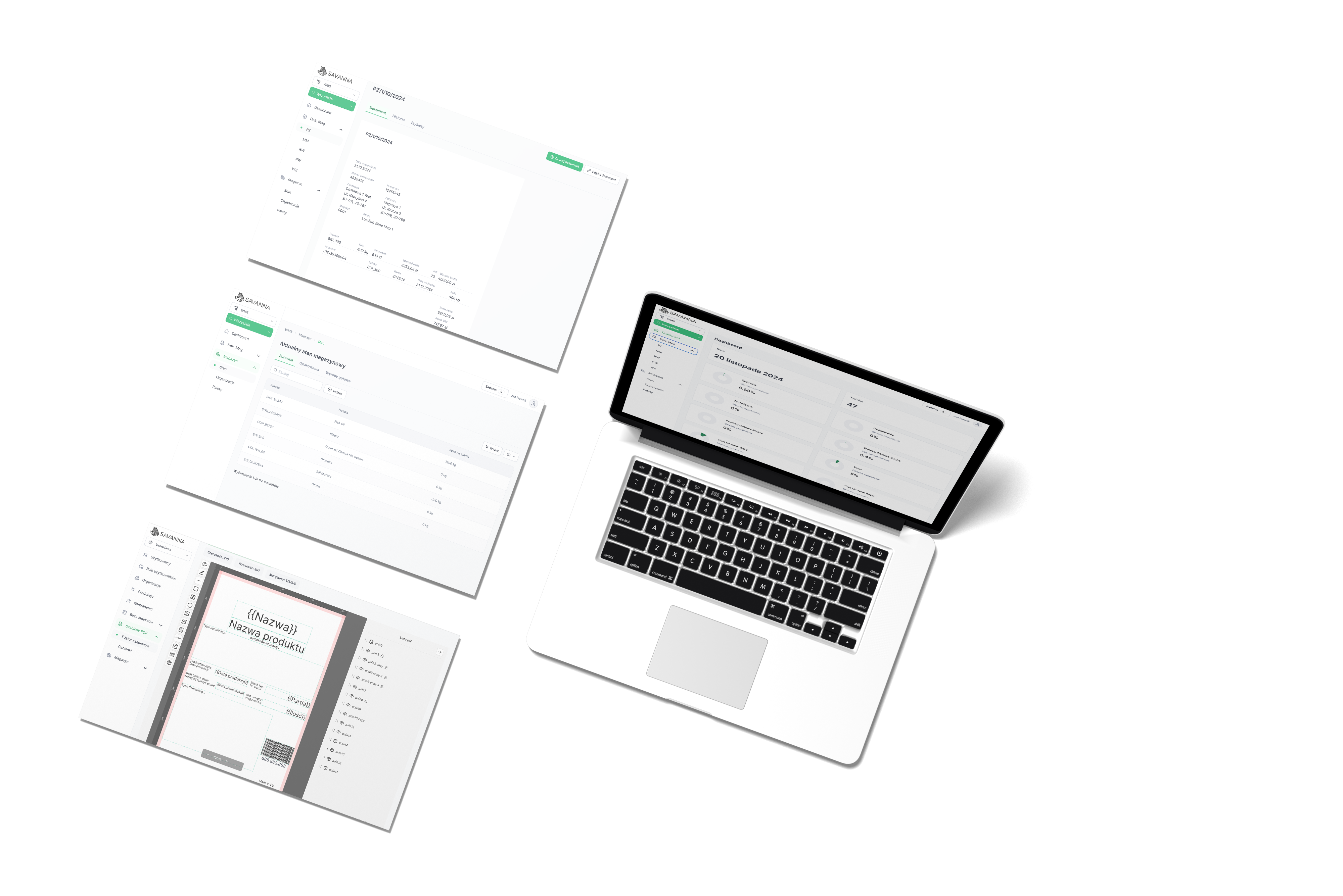
Savanna One is a scalable Modular Platform for Asset, Warehouse, and Production Management


Process
MY ROLE & RESPONSIBILITIES
Product Manager / Product Owner
I owned the product lifecycle from discovery through delivery, translating complex operational requirements into a clear product strategy and an executable delivery plan.
My responsibilities spanned product strategy, discovery, stakeholder management, backlog ownership, prioritization, roadmap development, UX, delivery management, and cross-functional team leadership.
Product Management & Ownership
- Defined and communicated the Product Goal, product vision, scope, and success criteria.
- Translated business and operational needs into actionable product requirements and prioritized backlog items.
- Owned and continuously refined the Product Backlog, maintaining transparency around priorities, dependencies, and upcoming work.
- Established the product roadmap and delivery milestones, balancing business value, technical complexity, available resources, and timeline constraints.
- Coordinated a cross-functional team of developers, designers, leadership, and client stakeholders.
- Facilitated stakeholder alignment, sprint planning, backlog refinement, reviews, and decision-making.
- Identified and managed risks, dependencies, scope changes, and delivery constraints throughout the project.
- Maintained a continuous feedback loop between users, stakeholders, design, and engineering.
UX & Product Design
Alongside product ownership, I led the UX workstream, translating complex warehouse and manufacturing workflows into an intuitive product experience.
This included user research, process mapping, information architecture, wireframing, prototyping, design systems, usability testing, responsive design, and iterative product validation.
THE CHALLENGE
The project involved designing and building a unified Warehouse Management System (WMS) and Manufacturing Execution System (MES) for a major food production company.
The existing operational environment presented several challenges:
01. DISCONNECTED SYSTEMS
Warehouse and manufacturing operations were supported by systems that operated independently, creating fragmented workflows, duplicated effort, and limited visibility across the production environment.
02. COMPLEX OPERATIONAL WORKFLOWS
The platform needed to support a wide range of users and highly specialized processes across warehouse and production environments.
The challenge was not simply to digitize these processes, but to translate them into workflows that could be understood and efficiently operated by users with very different responsibilities and technical experience.
03. LEGACY UX PATTERNS
Many enterprise systems prioritize functionality over usability. The product needed to provide the depth required by an enterprise environment without creating unnecessary cognitive load for workers using the system throughout their day.
04. SCALABILITY
The solution could not be built as a one-off implementation. Although the initial product was developed around the needs of a core food production client, the underlying architecture and product model needed to support future integrations, customers, and potentially other industries.
PRODUCT OBJECTIVE
Design, build, test, and deliver a scalable WMS + MES platform within 9 months.
The product needed to:
- Unify warehouse and production workflows
- Improve operational efficiency
- Make complex processes easier to execute
- Provide managers with actionable operational visibility
- Create a scalable foundation for future integrations
- Support a modular product architecture
- Meet defined acceptance criteria within the agreed budget and timeline
The objective was therefore both operational and strategic: solve an immediate client problem while creating a product foundation that could evolve beyond the initial implementation.
THE TEAM
I worked with a lean cross-functional team consisting of:
- 2 Front-End Developers
- 2 Full-Stack Developers
- CEO / Executive Stakeholder
- Product Manager / Product Owner, myself
Primary delivery tools: Jira, Figma, FigJam
The small team required a high degree of ownership and cross-functional collaboration. Decisions needed to be made quickly, dependencies surfaced early, and priorities communicated clearly.
DISCOVERY
The project began with a 3.5-week discovery phase.
Rather than immediately moving into solution design, I used discovery to establish a shared understanding of the business, users, operational environment, and product opportunity.
Stakeholder Discovery
I conducted stakeholder interviews to understand:
- Business objectives
- Existing operational challenges
- Current technology landscape
- User roles and responsibilities
- Business constraints
- Integration requirements
- Future product ambitions
- Success criteria
User & Domain Understanding
Because the product operated within a highly specialized environment, understanding the domain was critical.
I mapped the major user groups and created provisional personas to represent different operational roles, responsibilities, and needs.
Competitive Analysis
I analyzed direct and indirect competitors to understand:
- Existing market solutions
- Common WMS and MES functionality
- Industry conventions
- UX patterns
- Differentiation opportunities
- Gaps in existing products
Strategic Definition
The findings from discovery were translated into:
- Product goals
- Initial OKRs
- Scope boundaries
- Success criteria
- Resource requirements
- Product priorities
- High-level roadmap
This created a shared product direction before significant engineering resources were committed.
PRODUCT STRATEGY & ROADMAP
Once the information architecture and core product direction were validated with stakeholders, I translated the discovery findings into an Agile delivery strategy.
Rather than treating the platform as one large release, I decomposed the product into four major milestones.
01. ASSET MANAGEMENT
Establish the underlying asset database and workflows required to track operational assets efficiently.
02. WMS + PRODUCTION MVP
Deliver the core warehouse and production capabilities required to address the client's immediate operational needs.
03. SCALABLE NETWORK
Establish the infrastructure and network foundations required to support future growth and performance requirements.
04. API INTEGRATION
Create the integration layer required to connect the product with other enterprise platforms and tools.
This modular approach allowed the team to deliver value incrementally while reducing the risk associated with building a large enterprise platform as a single release.
I created the roadmap and delivery plan in FigJam, connecting milestones, dependencies, priorities, and timelines to create a shared view of the product strategy across the team and stakeholders.
PROCESS MAPPING
One of the biggest product challenges was the complexity of the operational environment.
Warehouse and production workflows contain specialized terminology, dependencies, exceptions, and sequences that are difficult to communicate through traditional requirements documentation alone.
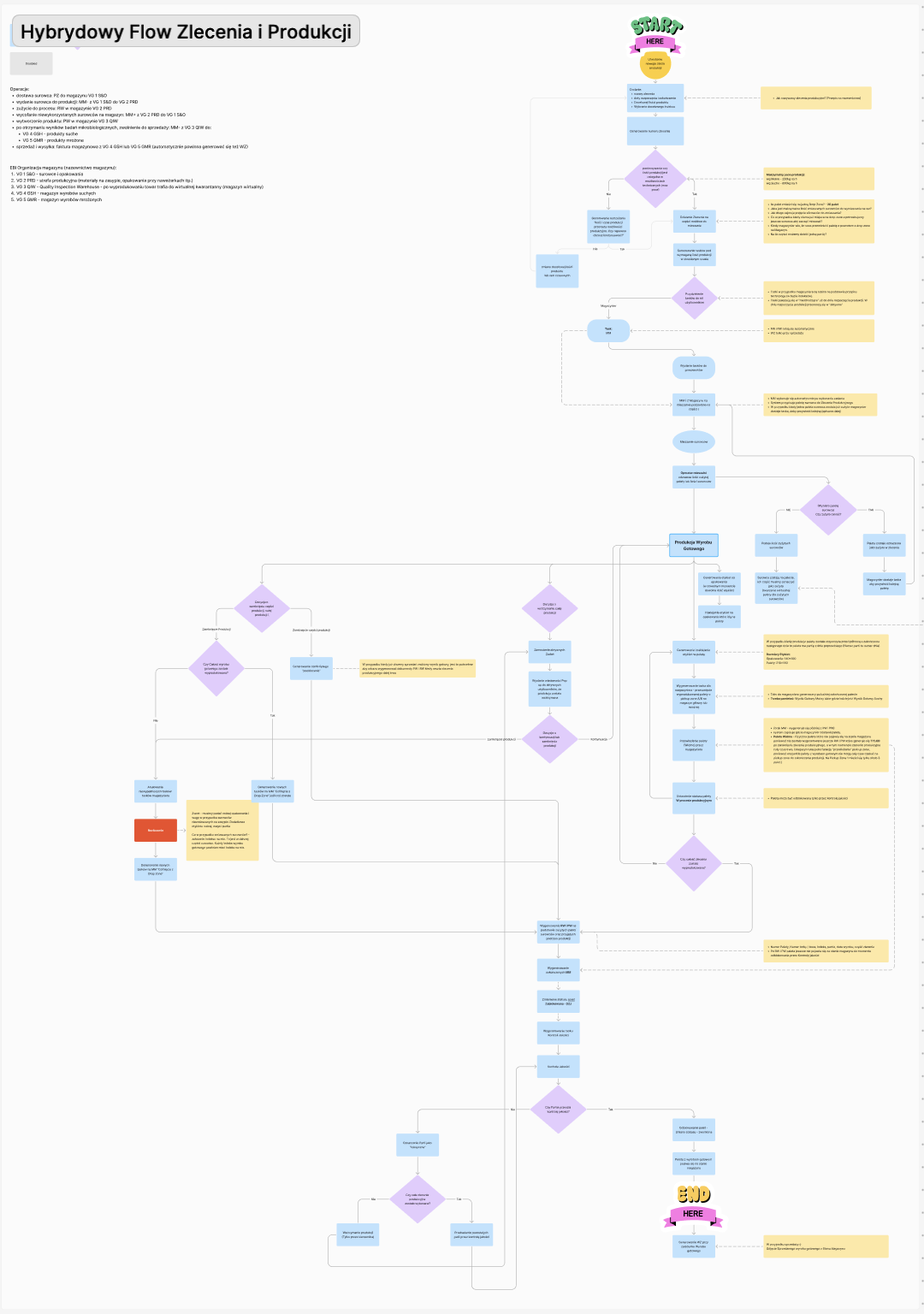
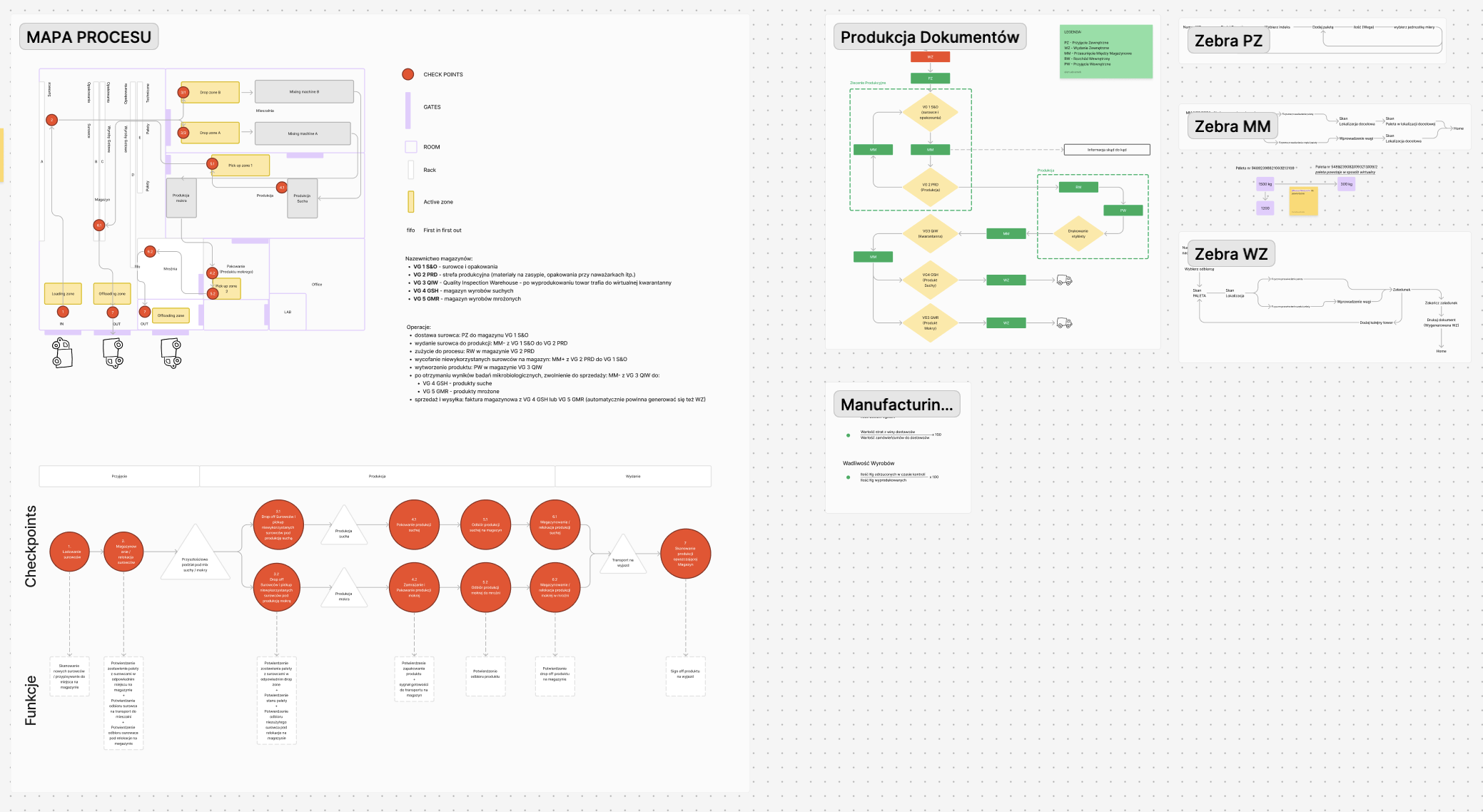
To solve this, I created detailed process maps covering the operational workflows the product needed to support.
These maps became a shared reference point for product, design, engineering, and stakeholders.
They helped us:
- Establish a common understanding of the domain
- Identify dependencies between workflows
- Surface edge cases earlier
- Translate operational processes into product requirements
- Identify opportunities for simplification
- Reduce ambiguity during development
This became an important bridge between business operations and product development.
PRODUCT DESIGN
Given the scale of the platform, maintaining consistency across hundreds of potential views and interactions was critical.
I established a reusable design system and translated the product architecture and process maps into detailed Figma designs.
Rather than designing screens in isolation, I approached the product as a system of reusable patterns, components, workflows, and states.
This allowed us to maintain consistency while accelerating the design and development process.
DESIGN & DEVELOPMENT WORKFLOW
To improve handoff and reduce communication overhead, I established a visual status system within Figma:
Yellow: Requires iteration or correction, with an associated Jira task.
Green: Finalized and ready for development.
Red: Suspended or cancelled.
This created a direct connection between product requirements, design decisions, and engineering execution.
Developers could immediately understand which views were actionable, which required attention, and which had been intentionally removed from scope.
DELIVERY & EXECUTION
Execution followed an iterative Agile model.
I was responsible for maintaining alignment between the product roadmap and day-to-day execution, including:
- Backlog refinement
- Prioritization
- Sprint planning
- Task delegation
- Stakeholder reviews
- Design validation
- User testing
- Acceptance criteria
- Risk management
- Scope management
Rather than treating the initial roadmap as fixed, I continuously evaluated priorities against new information and emerging constraints.
This was particularly important when additional requirements emerged within the WMS module.
SCOPE MANAGEMENT
Scope expansion became a significant challenge during the WMS phase.
Instead of allowing additional requirements to disrupt the overall delivery plan, I used proactive backlog refinement and deliberately maintained sprint capacity and schedule buffer.
New requirements were assessed against:
- Business value
- User impact
- Technical complexity
- Dependencies
- Delivery risk
- Available capacity
This allowed us to absorb additional scope while protecting the critical path.
The result was a product that was delivered on time, within budget, and against the agreed acceptance criteria.

Conclusion
OUTCOME
The project successfully delivered a modular WMS + MES platform designed around the operational needs of a major food production environment.
More importantly, the product was structured as a scalable foundation rather than a single-purpose implementation.
The project established:
- A unified approach to warehouse and production workflows
- A modular product architecture
- A scalable foundation for future integrations
- Clear operational process models
- A reusable design system
- A structured product backlog and roadmap
- Improved visibility into operational processes
- A framework capable of supporting future industries and use cases
The product was delivered within the 9-month timeline and agreed budget, despite scope expansion during development.
KEY PRODUCT MANAGEMENT TAKEAWAYS
01. Complexity needs to be translated, not simply documented
Enterprise products often fail when complex business processes are transferred directly into software without being properly understood.
Process mapping and domain discovery allowed me to translate operational complexity into clear product requirements and usable workflows.
02. Product management is fundamentally about trade-offs
There is rarely enough time, budget, or capacity to build everything.
The role of the Product Manager is to continuously determine what creates the most value, what can wait, and what risks the team cannot afford to take.
03. A roadmap is a decision-making framework
The roadmap was not treated as a static list of features. It provided a shared framework for understanding priorities, sequencing dependencies, allocating resources, and making informed trade-offs as new information emerged.
04. Scalability starts with product decisions
Building for scalability is not only a technical concern.
Modular product architecture, reusable design patterns, clear APIs, structured processes, and a well-defined backlog all contribute to creating a product that can evolve without repeatedly rebuilding its foundations.
05. Strong delivery comes from strong alignment
With a lean team and a complex product, communication became a critical part of execution.
Clear goals, transparent priorities, well-defined requirements, and continuous stakeholder alignment enabled the team to move quickly without losing sight of the broader product strategy.