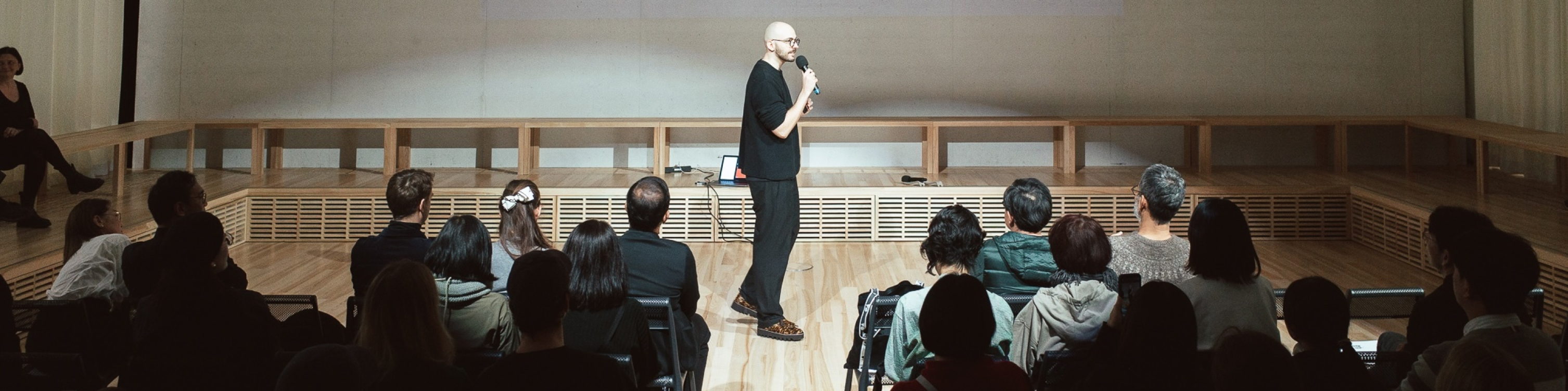
A product leaderProduct LeaderDefines product vision, aligns teams and stakeholders, and turns business goals into products that create measurable user and business value. / product builderProduct BuilderTurns ideas into real, usable products by combining strategy, UX, technology, experimentation, and execution from concept to launch. using AI-native thinking to turn complex customer problems into clear, scalable digital products.
00:00:00
Warsaw
SCOP
Client
SCOP
Scope
Discovery, IA, build
Year
March to December 2023
Role
Product Builder, UX Lead, Webflow Dev
Live site
scop.org.pl
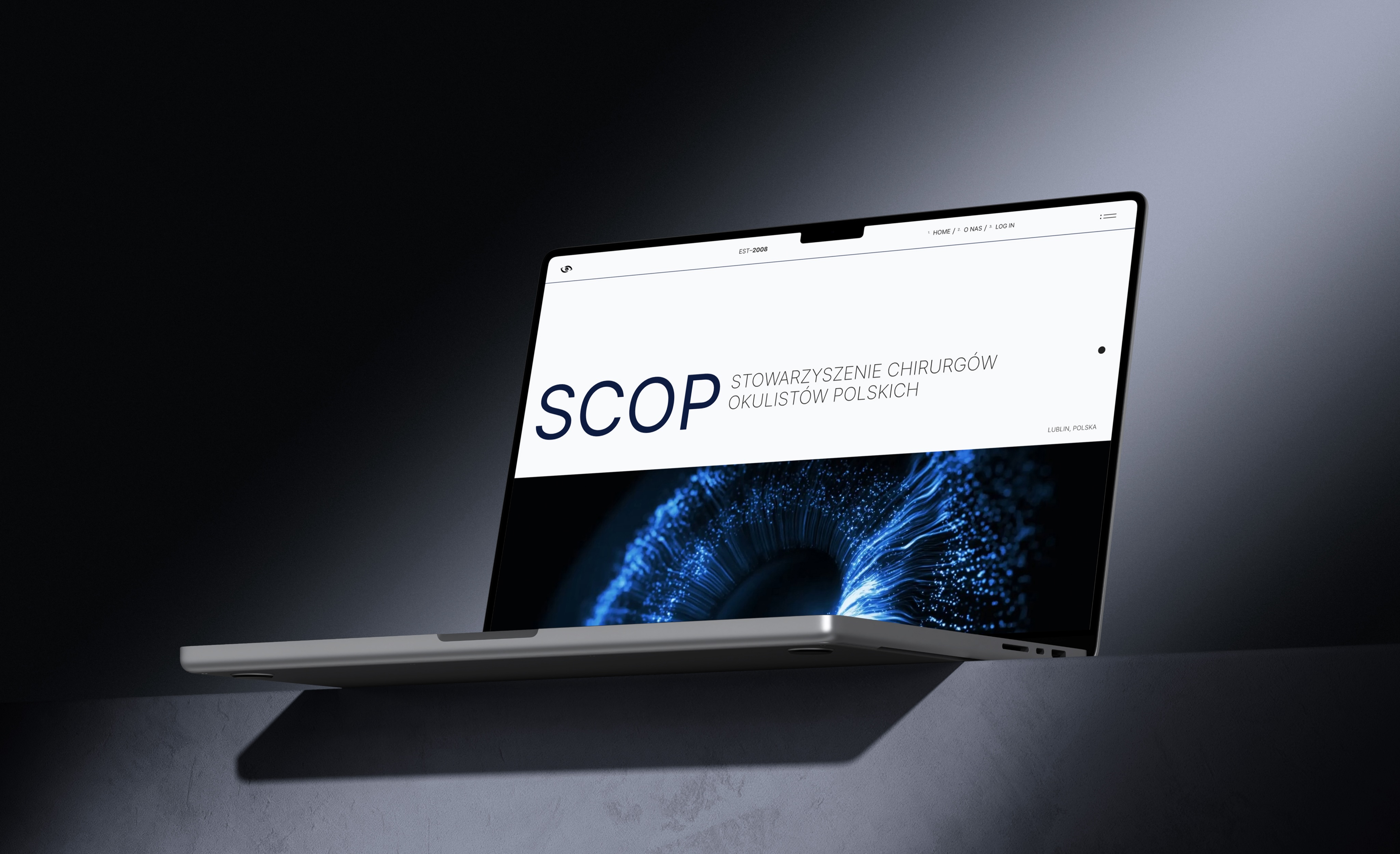
In short
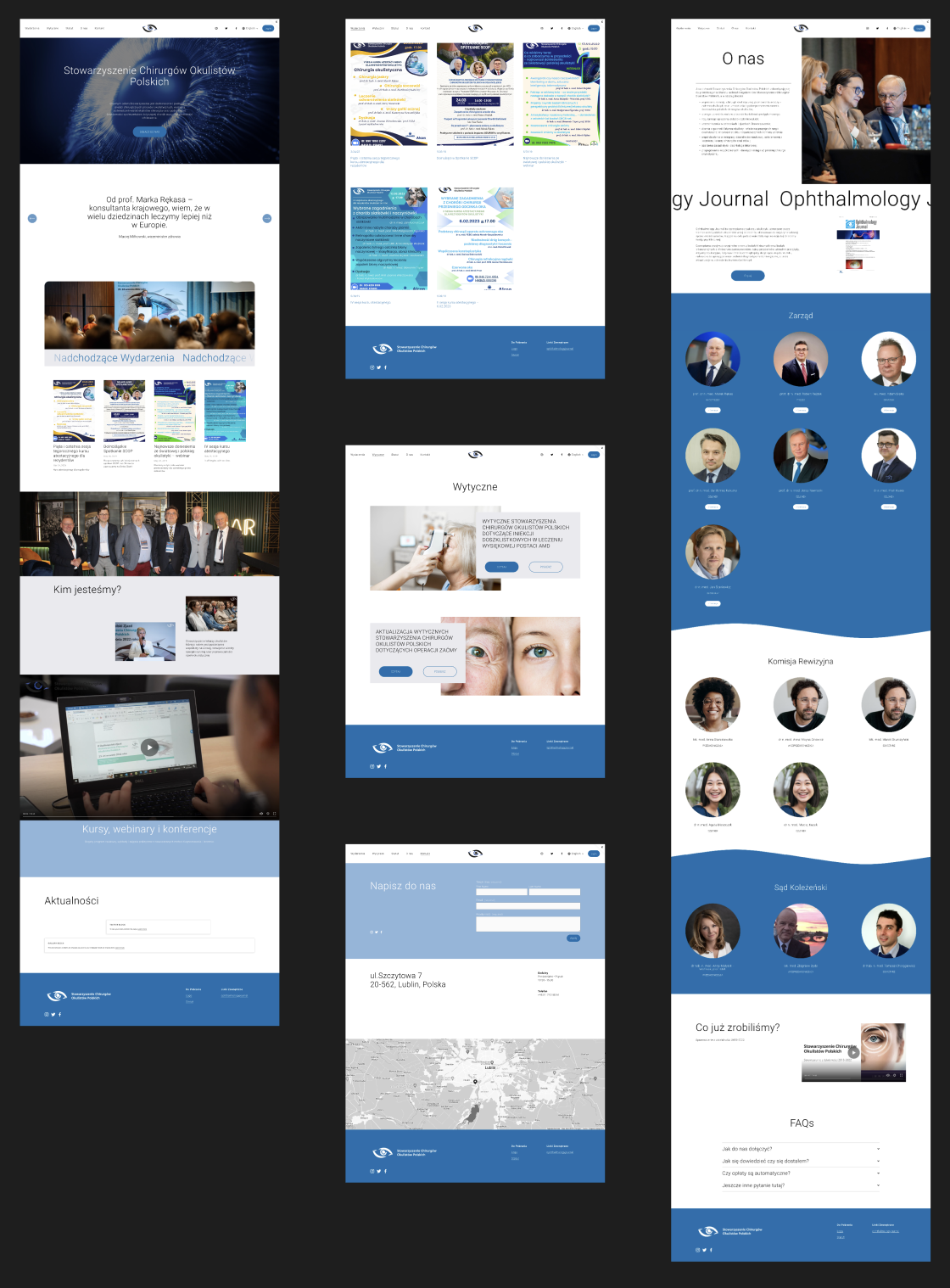
A complete remake of the digital platform of SCOP, the Polish association of eye surgeons: refined brand experience, new information architecture, better usability, accessibility, responsiveness and content management. The goal was never just a more contemporary website. It was a digital experience worthy of the calibre of SCOP's members, that makes their knowledge, events and opportunities easy to reach.
One person, three hats, ten months. Pick a hat.
- Stakeholder management and requirements gathering
- Product and UX strategy, problem definition, prioritisation
- Balancing organisational needs, user experience and technical feasibility
- Client training and handover, so SCOP could run the platform alone
- User research, segmentation and personas
- Competitive analysis
- Information architecture built around user intent
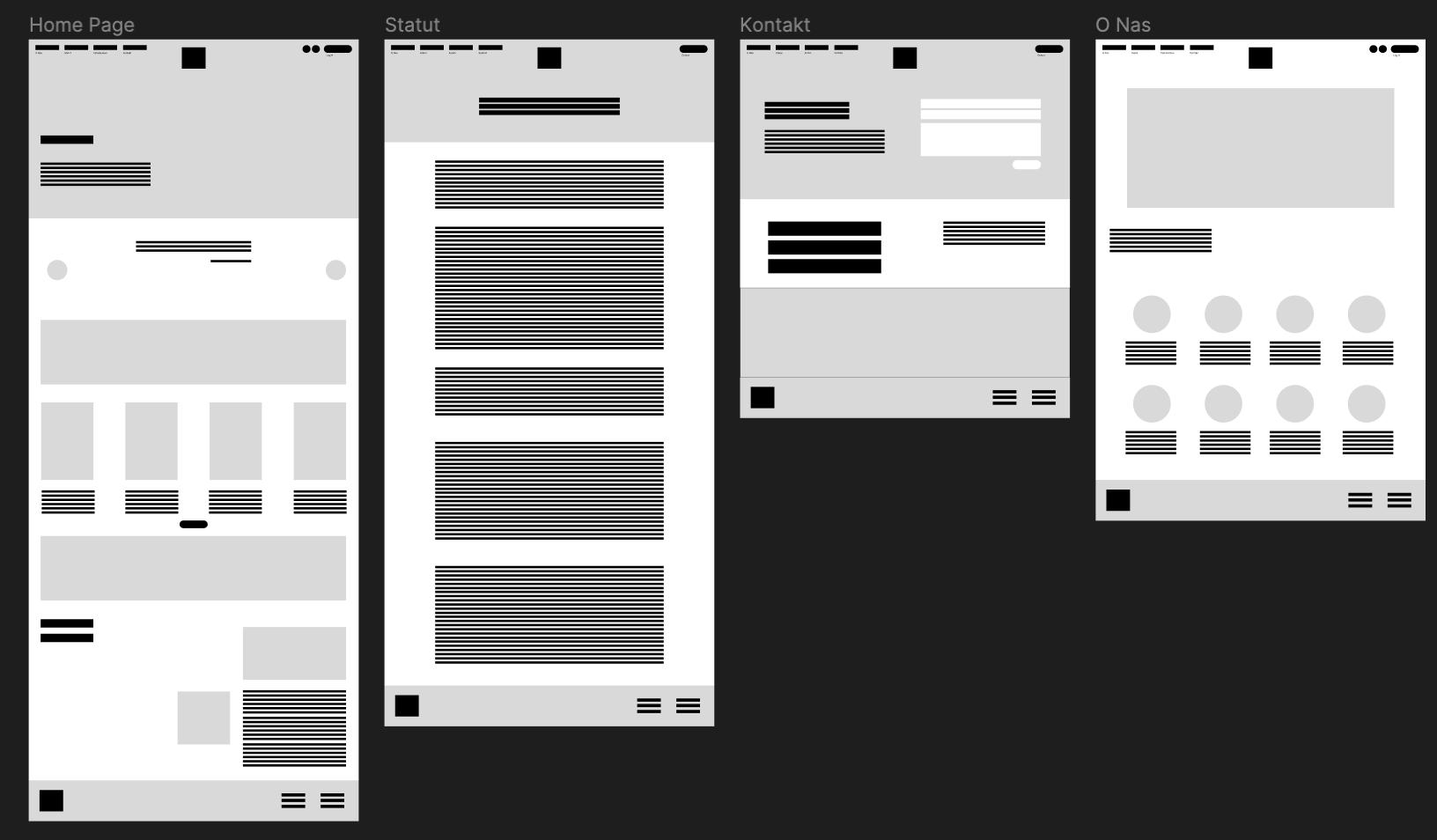
- Wireframing, prototyping, usability and accessibility
- Responsive design and a reusable design system
- Webflow development
- CMS implementation and content structures
- Integration with the client's existing technical environment
- Quality assurance and launch
By the numbers
The challenge
SCOP is a professional association of leading ophthalmologists, researchers and specialists, and its website had stopped looking like one. It wasn't fully responsive, the content was dense and hard to navigate, the structure didn't serve members, prospective members or partners, it missed WCAG 2.1, the CMS was dated, and the things people actually came for, events, news, membership, partnerships, were the hardest to find. The product challenge was to modernise all of that while keeping the organisation's content and the way it works.
Direct and indirect organisations, judged on brand positioning, first impressions, information architecture, interaction, visual design, content strategy, events and community features, and responsiveness.
- Clearer brand positioning and better communication of organisational value
- More responsive digital experiences
- Stronger content hierarchy
- More engaging event and community experiences
Three people
Direct access to members was limited, so stakeholder interviews and a full product audit had to carry the research. Out of it came three audiences, and three people to keep them honest.
Needs
Because
The journey
Try it yourself
The old site was organised like the association. The new one is organised like a question. Pick a visitor, then switch between the two structures and watch where they can go.
The process
Four phases, one owner, and a chain that had to hold from the first requirement to the last CMS field. Step through them.
Accessible by design
Accessibility was part of the product, not a QA step at the end: readability, contrast, hierarchy, responsive behaviour, scalable type and accessible interaction patterns, tested at up to 200% zoom. Try it on this sample membership page.
The outcome
The project delivered a significantly modernised platform that fixed both the visible and the structural limitations of the old one. Flip the switch to see each one against what it replaced.
Takeaways
Five product management lessons from a project where one person held every role. Open them.
A visual refresh alone would not have solved the underlying problems. The meaningful improvements came from understanding why the existing experience was failing, restructuring information around user intent, and fixing the operational limitations behind the interface.
In client-facing product work, stakeholders are attached to existing patterns because those patterns are familiar. Part of the product manager's job is to create enough trust and transparency that they understand not only what is changing, but why it has to.
The public-facing experience is only one part of the product. CMS usability, accessibility, maintainability, scalability, staff enablement and implementation constraints all decide whether a digital product actually succeeds.
The project had to live inside an existing technical and organisational environment. Rather than treating that as a blocker, I used it to shape product decisions and find the highest-value solution that could realistically be implemented and maintained.
The strongest lesson from the project was that product work is about more than software.
That combination is what turns a redesign into a successful product.
Toolkit
© 2026, Alan Abramek. All Rights Reserved.